
The Body Shapes the Design
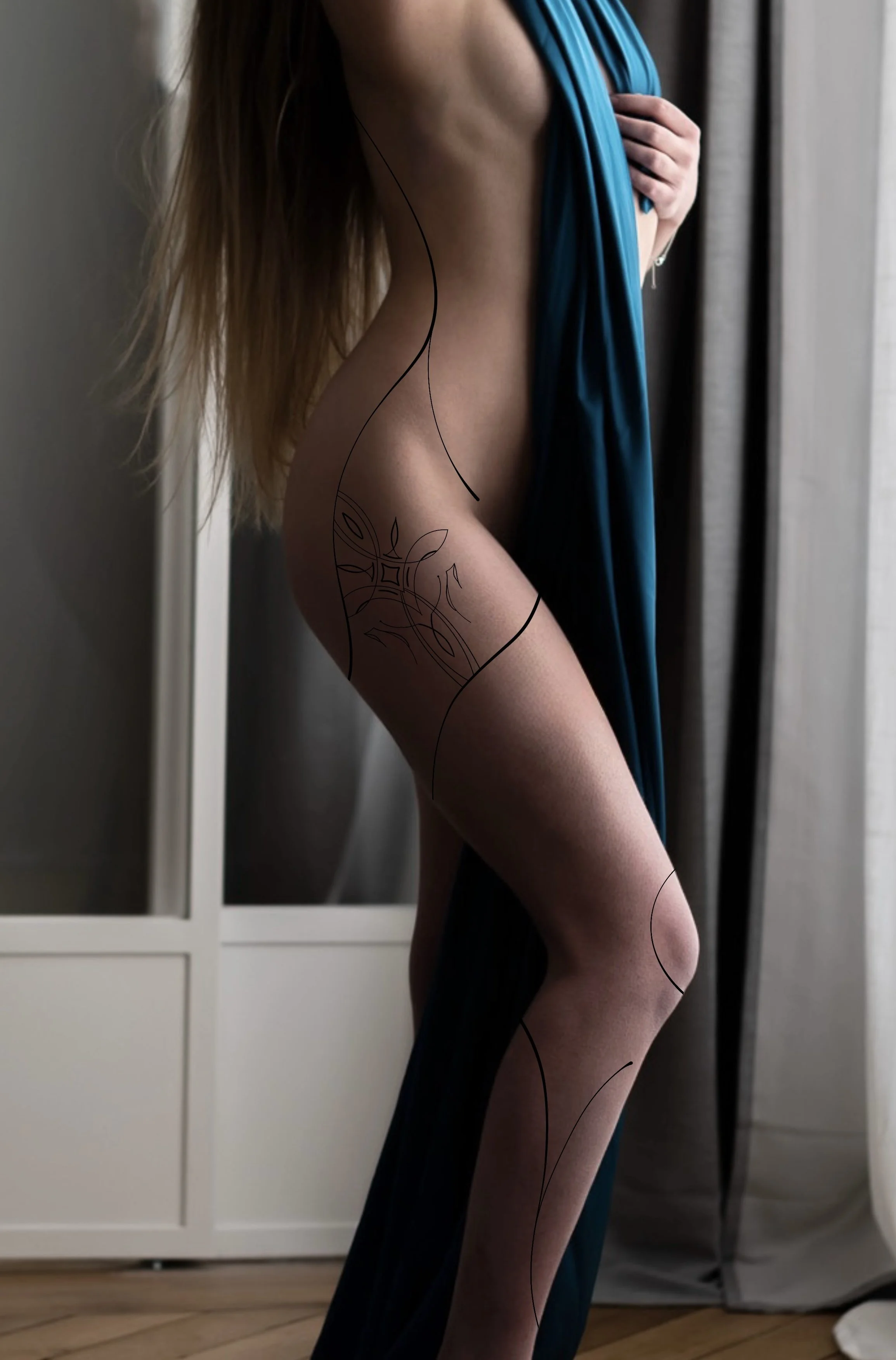
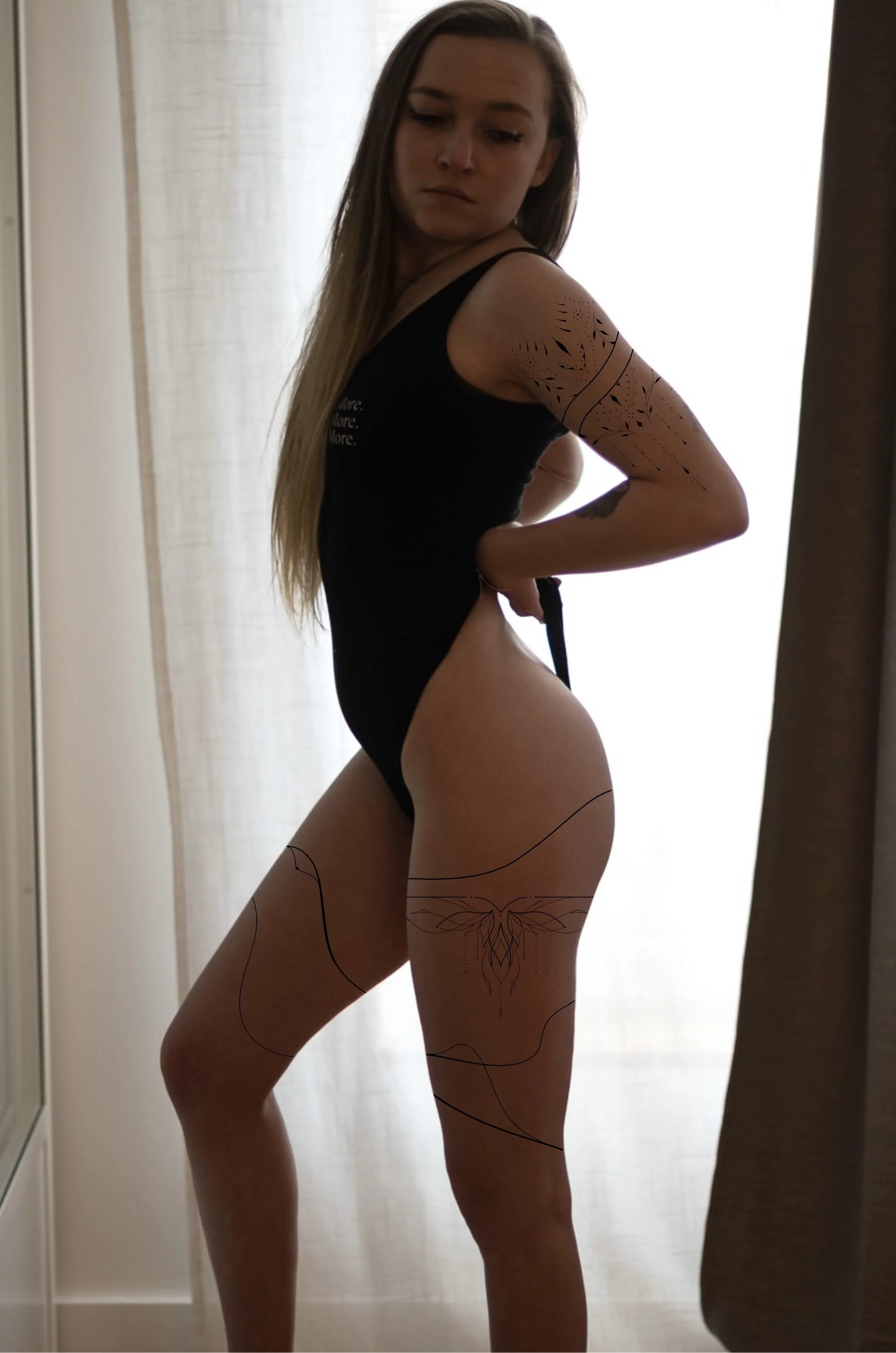
Before I start explaining the way of tattoo designing below, I would like to share an important note. The fine line tattoo designs shown on the Chloé`s body (colored photos) are digital design previews created in Procreate. They were placed on the models to show how each composition works with the natural shape, curves and movement of the body. Below, I will explain how I use anatomy, flow, line weight, contrast, ornaments and open skin when creating each design.
Image & Usage Notice
Published with the consent of the persons featured.
Model © Chloé Mahieu · Photographer © Gaëtan Collin
Any reproduction, copying, distribution or use without prior written permission is prohibited. Contact information can be found at the end of this page.
Where Anatomy Meets Flow
I don’t design a tattoo first and simply place it on the body afterwards. The body is part of the design process from the beginning. Its curves, proportions and movement help determine where a line should travel, where an ornament can become a focal point, where the direction should change and, just as importantly, where nothing should be added.
My compositions are built around four principles: anatomy, flow, contrast and minimalism.
mertcoskun
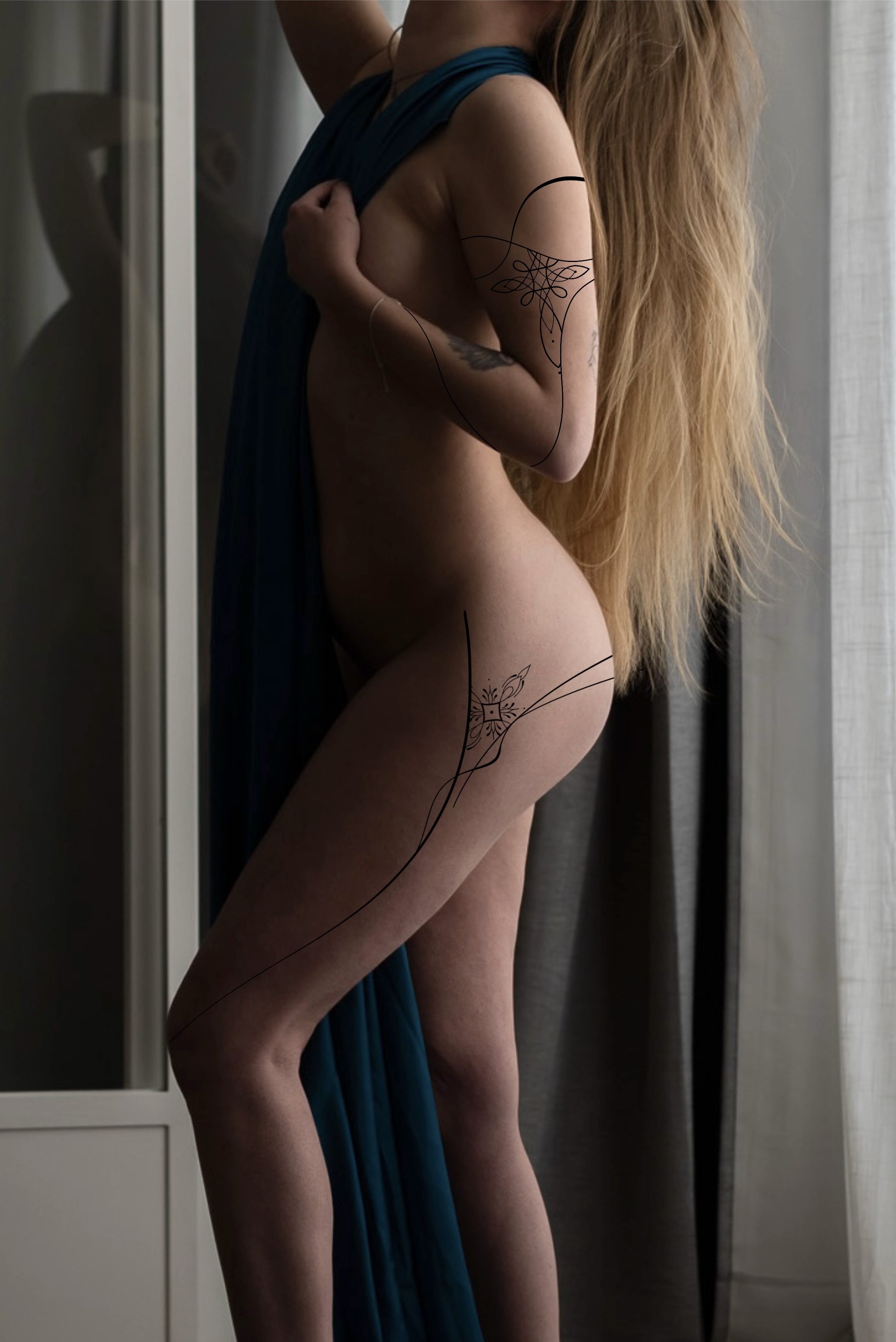
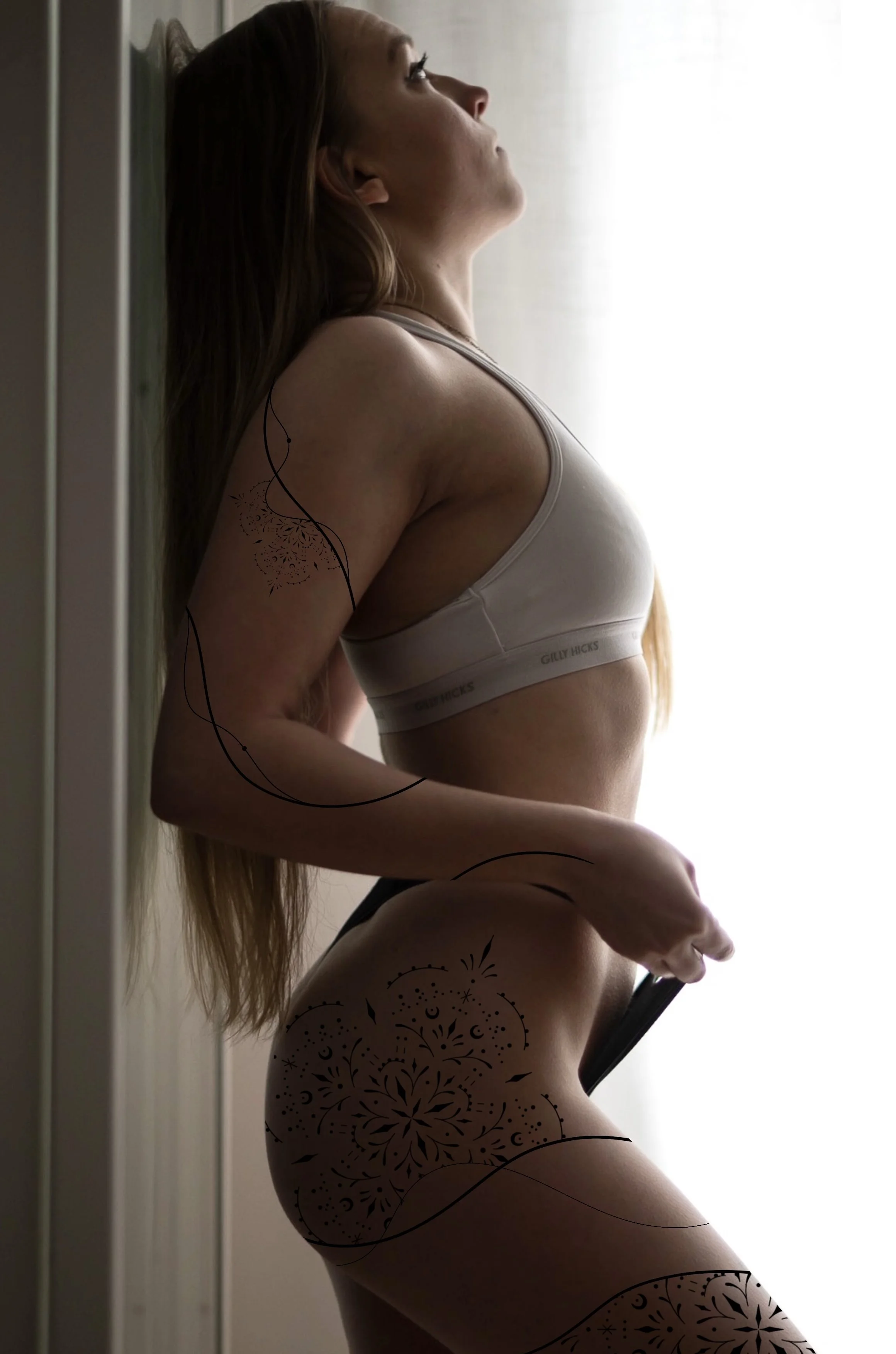
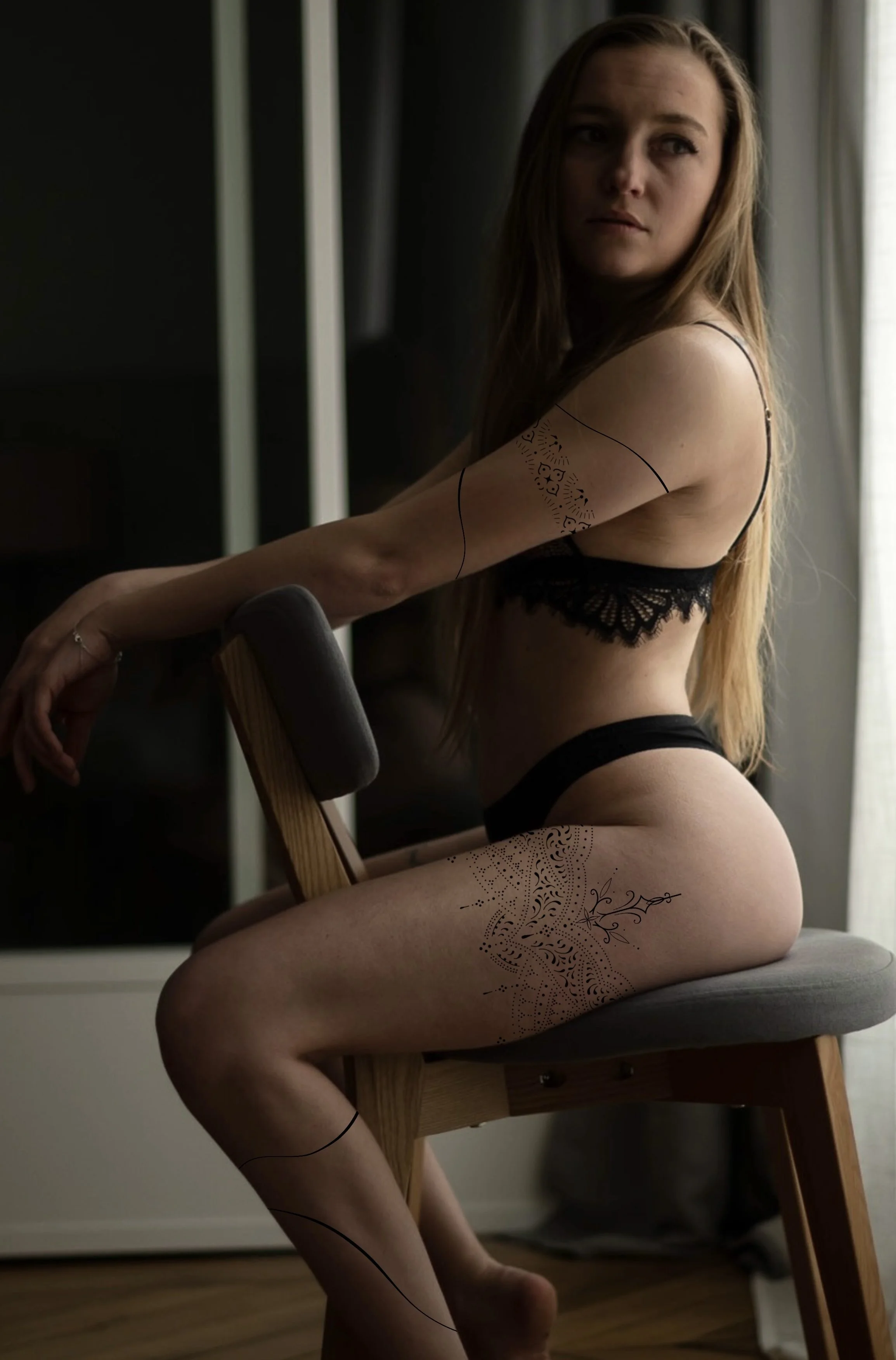
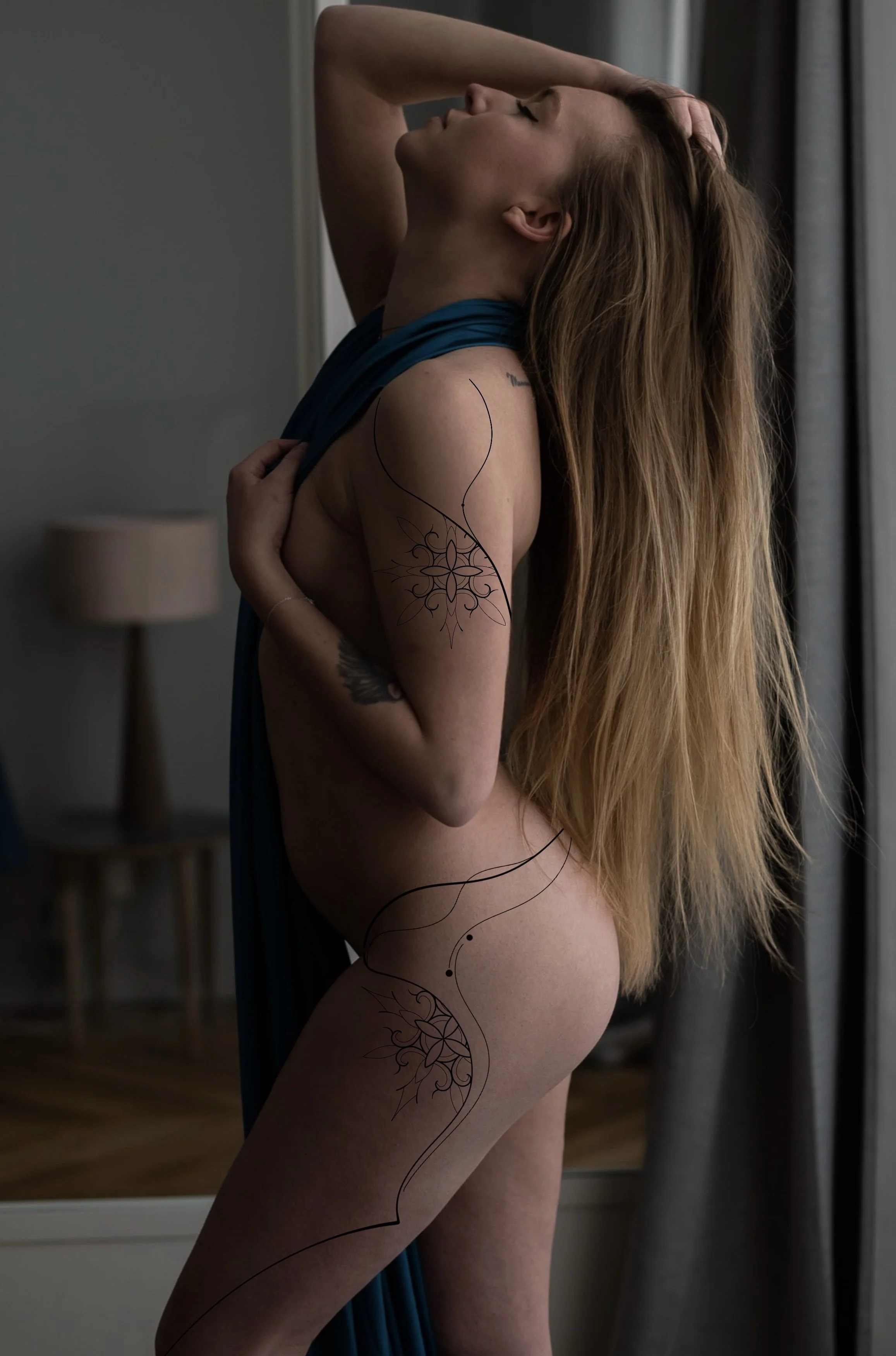
Anatomy-led
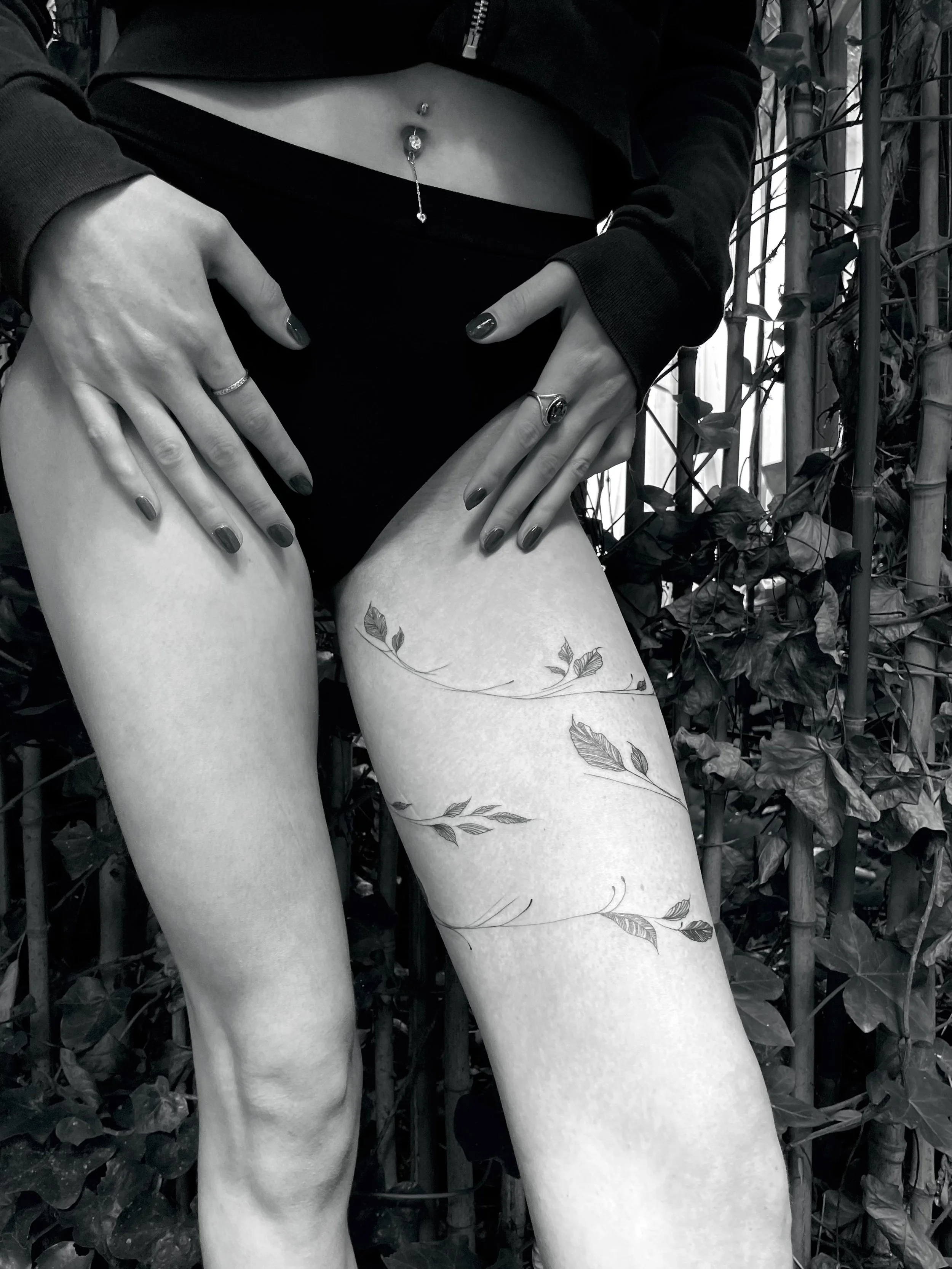
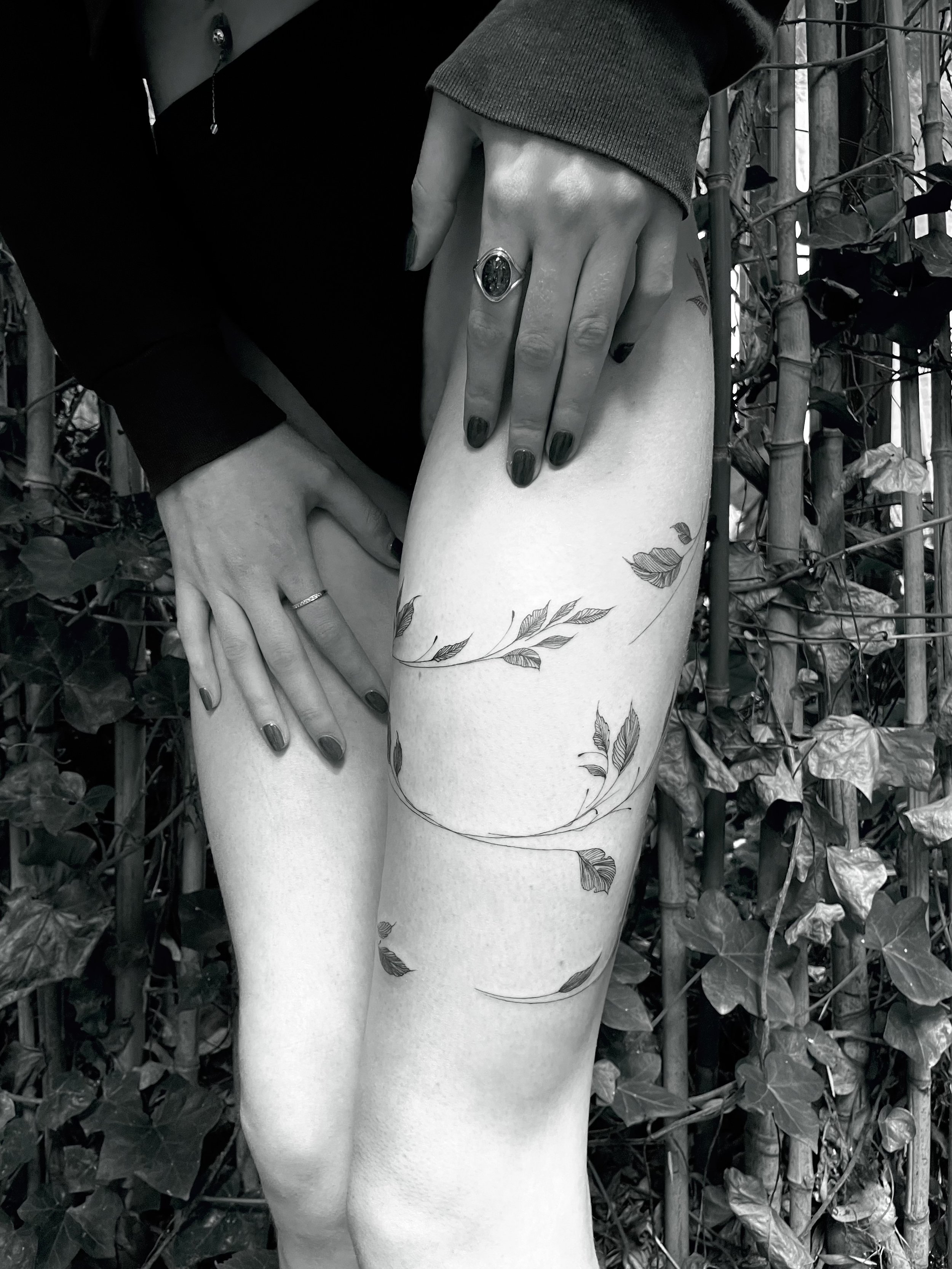
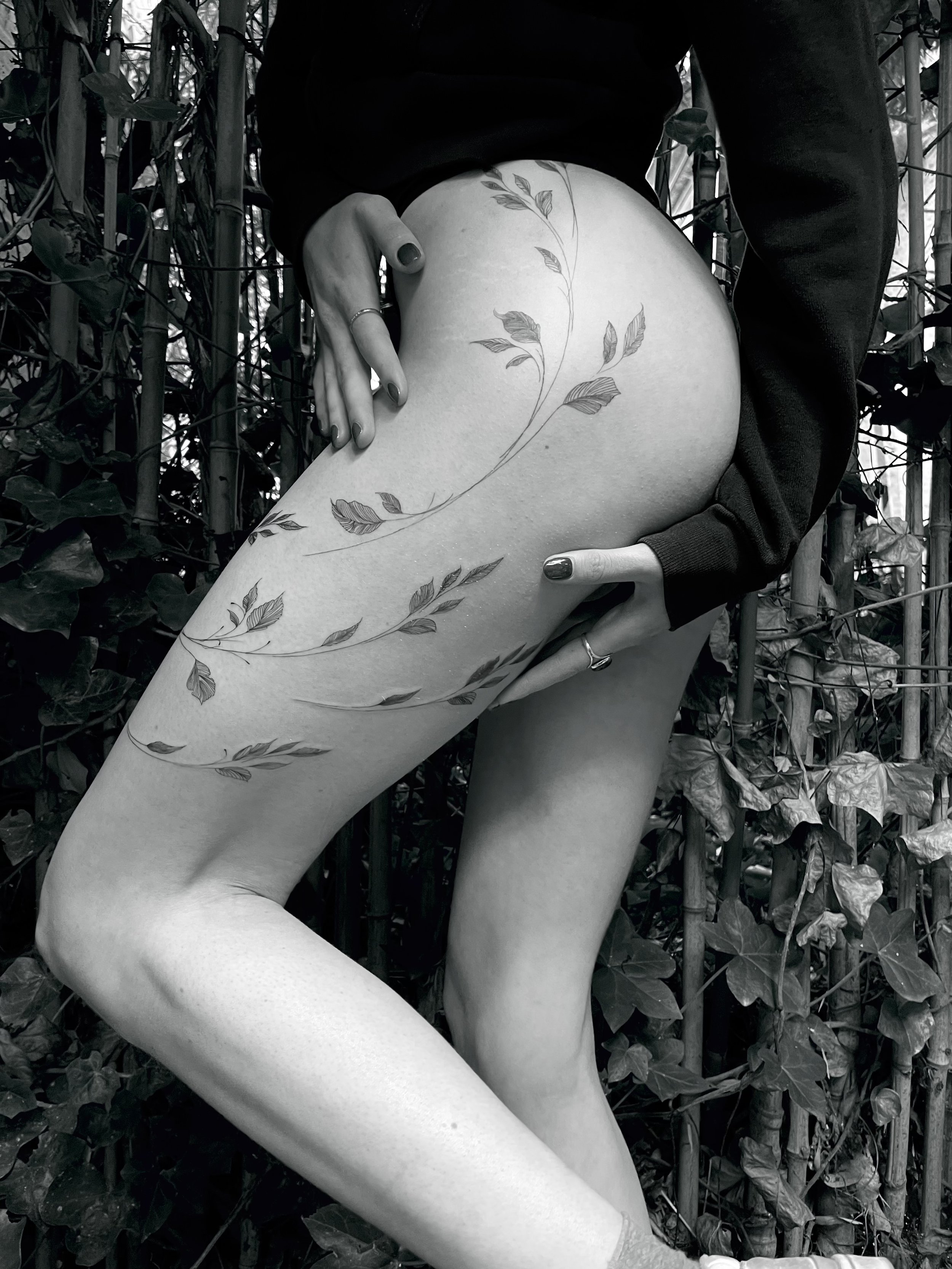
Every part of the body has its own shape and direction. A shoulder is rounded, a thigh creates a longer vertical surface, the hip introduces a stronger curve, and an arm or leg continues around a three-dimensional form. I use these anatomical characteristics as the starting point of the composition. Long lines can follow and emphasise the natural direction of a limb, while ornaments are placed where the anatomy gives them enough space or where the shape of the body naturally creates a transition. Their scale also changes with the body: a smaller ornament may work better around a rounded shoulder, while the broader surface of the hip or thigh can support a larger and more detailed form. The goal is not to cover the body with a design, but to create a design that feels as though it belongs to that particular part of the body.
Flow
For me, flow does not mean that every line has to continue uninterrupted in the same direction. A line can meet an ornament, pass through it, disappear behind it, change direction or deliberately break its symmetry. An ornament can become a turning point where one movement ends and another begins. These interruptions are part of the movement. I also think beyond the single angle from which a tattoo is photographed. Lines and ornaments can travel around an arm or thigh, disappear from view and reconnect visually on another side of the body. This allows the composition to respond to the body as a three-dimensional form rather than a flat surface. Sometimes breaking the design is exactly what keeps it moving.
Line Weight & Contrast
Contrast does not always need to come from making a tattoo darker. I create hierarchy by changing line weight, density and detail. An ornament containing many fine elements already carries visual weight, so the lines around it can remain cleaner and quieter. A simpler area can support a stronger line, while finer lines can soften transitions or sit next to more delicate details. I also use the rhythm between detail and simplicity as another form of contrast. A detailed ornament followed by open skin and then another point of detail gives the eye a natural sequence to follow. This creates depth and rhythm while keeping the overall composition light.
Minimalism
Minimalism, for me, is not simply about making tattoos small or removing detail. It is about knowing where detail is necessary, where it should stop and where the skin should remain untouched. I avoid filling every space or connecting every element simply because there is room to do so. Detailed ornaments can exist within much larger compositions because open skin gives them space to breathe. I also often leave ornaments incomplete, interrupt their symmetry or allow parts of them to disappear naturally around the body. The eye can still understand the form without every part being explicitly drawn. The tattoo and the body share the composition. The result is not a design placed on the body, but a composition shaped by it.